
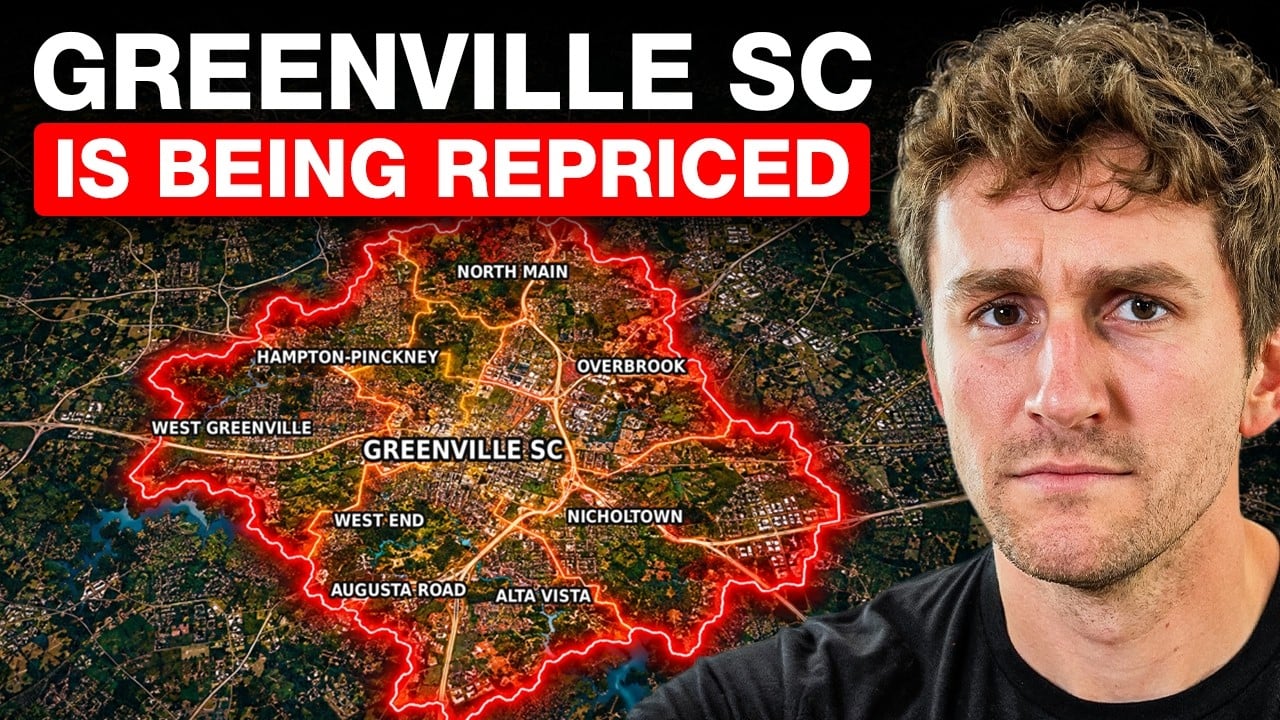
Quick Answer: Is the Greenville housing market crashing or out of reach?
It's neither one. Prices aren't dropping everywhere and they aren't climbing everywhere, because the whole Upstate is being adjusted right now by seven changes that most buyers and sellers are walking right past. Active homes for sale in the county are up about 12% from last year, homes sat on the market an average of about 40 days in September, and on paper sellers still have the edge with months supply of inventory around 5 months or less. On top of that, builders are undercutting resale homes on terms, move-in ready homes still pull multiple offers, retirees are often paying cash, Lake Keowee has its own rules, hidden costs like HOA dues are catching out-of-state buyers off guard, and rate lock-in is the real reason inventory isn't flooding. Before you buy or sell, figure out which of these changes is helping your house and which one is hurting it, instead of reading one headline and applying it to all seven.
Watch the Video
Here's the whole breakdown, all seven changes adjusting the Greenville market and what each one does to your money:
Do buyers in Greenville finally have room to breathe, and what does that mean for sellers?
Think back to buying a house here in 2022. You'd see it Friday morning and write an offer Friday afternoon. You'd skip your inspection, go 10 grand over, and still lose to somebody paying cash.
That Greenville is gone.
Active homes for sale in the county are up about 12% from last year, and that's a whole different way of shopping. In September of this year, homes in our market sat for an average of about 40 days, and days on market is up in multiple price bands: under $400k, $400k to $600k, $600k to $800k, and $800k and up. Two years ago, days on market was well under a month.
That extra time changes how you buy. It's your inspection. It's your second showing with your spouse. It's looking at four houses in one weekend and picking the best one, instead of grabbing the only one you could get. Buyers walk in here bracing for a fight and find room to breathe instead.
Now, don't hear me say the market fell apart, because in no way has it fallen apart. On paper, sellers still have the edge, with months supply of inventory around 5 months or less. What's gone is the panic.
If you're selling
That shift flips on you if you're the one selling. Price your home off of a guess and you could potentially sit on the market well beyond those average days on market. You'll sit for 60 days, you'll cut your price, and you'll take less than you would have if you'd priced it right on day one. We watch that happen every month.
So if you've been telling yourself you know what your home is worth, that number may have changed this year.
Price is only half of what's separating the homes that sell from the homes that sit. The other half has nothing to do with the number on the sign, and it's why two houses on the same street can end up in totally different spots.
Why are move-in ready homes still getting multiple offers while project houses sit?
Buyers still throw elbows over one thing in this market: condition.
Fewer and fewer buyers are willing to take on a project house anymore. That's the change, and it happened fast.
Two years ago, somebody would buy a home with a 22-year-old roof, old cabinets, and so-so carpet in the bedrooms, because that was the only thing out there. That buyer doesn't settle now. Those homes sit until an investor scoops one up for a number that made the seller sick.
Meanwhile, a nice updated home in one of the more popular parts of the county will still pull three or four offers. Same county. Same month. Same rates as the house down the road that's been sitting since spring.
If you're buying
If you want something move-in ready, get a fully underwritten pre-approval before you tour a thing. When the good one hits, you may not have as long as you think.
If you're selling
Condition is doing the work that rising prices used to do for you. Paint it, fix the roof, or give a credit for it. And get the torn and stained carpet out.
You don't have to redo the whole house, but make sure you take away the excuses. Buyers are picky again, and that's costing sellers real money.
How are builders in Simpsonville and Greer undercutting resale homes?
Drive through Simpsonville. Drive through Greer. Drive out toward the BMW plant. You'll pass sign after sign for rate buydowns and closing cost help, sometimes both on the same house.
Those signs are pointed straight at your listing. Builders out that way are undercutting used homes right now, on the terms rather than the sticker prices, believe it or not.
A builder buys the rate down into the fives while the used home across the street is stuck with whatever the rate is that week, so the monthly payment is way different.
New construction in Greer is landing somewhere in the low $300s to the mid $400s, depending on the finishes. So a brand new house is going head to head with a 20-year-old house in the same neighborhood, at the same price, with better terms on top.
If you're selling out there
You're up against a builder with a sales quota and a budget to give money away. Those sellers are having to come back with credits of their own just to stay in the game. That works. Sitting there hoping the builder runs out of houses does not.
If you're buying
This is your leverage if you're open to new construction.
One honest word of warning: those builder deals come with strings. Most of the time, you've got to use their lender to get the buydown. Read what you're signing, because the fees on the back end can eat up what you saved on the rate.
It's best to have the builder's lender walk you through a loan estimate sheet up front, so you know what the fees are and how that would compare to using a traditional lender. Believe it or not, we've had buyers not use builders' lenders and forgo the massive incentives they offer, because the terms of the loan were much different. Have that candid conversation up front instead of realizing it after you've closed.
How are retirees changing what gets bought in Greenville?
Terms are one piece of this. Who's standing next to you at the open house is another, and that's changed more in two years than anything else on this list.
The person outbidding you probably isn't a young family stretching their budget. It's a couple in their 60s holding a cashier's check.
More than half of the folks calling our team right now are retirement age. Serving retirees is a significant portion of our buyer business, and Greenville keeps showing up as one of the top landing spots in the state for them.
The bigger deal is what they want once they get here. They need one story, or at least all of the living area on the main level. They prefer a small yard, and they love that lock it and leave it lifestyle. These are folks who plan to spend six weeks in Europe and three weeks with the grandkids in Ohio, and they want to pull out of the driveway without worrying about who's cutting the grass.
That's why you keep seeing new 55 and up communities pop up around Travelers Rest and Greenville. Builders figured this out way before most agents did.
What this means for younger buyers
That stings if you're a younger buyer, even more when you find out these folks are often paying cash. They sold a house in New Jersey or Long Island or outside Chicago, walked away with a check, and they don't need a loan, or need a very small one.
So you're bidding on a three-bedroom ranch against somebody who can close in 21 days with no loan to worry about. Buyers feel this every weekend, and they don't always know why they keep losing. Your price is fine. The offer sitting next to yours is just built better.
If you want a one-story home in the Upstate, you've got to get creative with your terms. Move your closing date, keep it clean, and if you can, put down real earnest money.
And if you're the one holding the cash here, you've got the advantage, so use it.
Why doesn't Greenville market news apply to Lake Keowee?
Everything above is if you're shopping in Greenville County. Drive about an hour west and every one of those rules goes out the window.
Two markets, same state, about an hour apart, and they've got almost nothing to do with each other.
Greenville's average price sits around $400,000, depending on the month and what part of the county you're looking at. Waterfront on Lake Keowee is trading north of $2 million in the middle, with most lakefront homes running somewhere between $2 million and $3 million.
The lake runs on cash. When rates move a quarter point, Greenville feels it within a week, but the lake doesn't blink. Those buyers aren't borrowing heavily, and they aren't as sensitive specifically to rate headlines.
So when somebody sends me an article about county inventory and asks what it means for their waterfront home, the answer is nothing. It means nothing to them at all.
The lake has its own rules
The lake has its own rules that are just as tough. Once you're over a million up there, you've got to nail the price, because sitting is expensive on the lake. Everybody is watching the same short list of homes, so a house that's been up for months gets a reputation fast.
Gated spots like The Reserve and The Cliffs are still staying busy breaking sales volume records.
We break our numbers out by area for this exact reason. If you're buying or selling on Keowee, a countywide report is the wrong piece of paper. We've got agents on our team who focus on the lake, so reach out and we'll get you numbers that match your part of the water.
What hidden costs catch out-of-state buyers off guard in Greenville?
Whether you're buying on the lake or in a Simpsonville subdivision, there's one set of costs that hits everybody the same. It never shows up on the listing, and it's the fastest way I've seen a moving budget fall apart.
The number that wrecks a relocating buyer isn't the price of the house. It's the stuff you find out about after you've fallen in love with it.
Property taxes are the good news
South Carolina does have low property taxes. If you live in the home, it's taxed at the owner occupied rate, and compared to what our clients are leaving behind in New York or New Jersey or Illinois, that's a huge break. I'm not going to talk you out of that one.
We regularly have clients who leave larger metros for a quieter, slower pace of life, and when they ask us what their property tax bill is going to be, they chuckle at our answer. The personal property taxes that South Carolina charges pale in comparison to what they pay just for property taxes alone in the home they've lived in for 10 to 20 years.
HOA dues are the surprise
Fees around Greenville are all over the place. Some neighborhoods are cheap, maybe $20 to $100 a month to keep the common areas up. Others run a few hundred a month once you add a clubhouse, a pool, or a gate.
I met with a woman not long ago who owns a townhome in Greer worth around $250,000. She pays about $140 a month, plus another $650 a year on top of that. On a home at that price, those dues are a real chunk of her monthly bill, and she didn't understand what it meant until she started making those payments.
South Carolina has no law capping how much an HOA can raise your dues. Nothing stops them from going up.
Look at the townhomes at Hollingsworth Park. Those dues were around $185 a month back in 2023. Today they're closer to $342. That's what happens when insurance and upkeep costs climb and the neighborhood has to cover it.
So a cheaper house doesn't mean a cheaper payment. I've watched buyers pick the less expensive townhome and pay more every month than they would have on the single-family home they passed on.
What to do before you write an offer
Read the HOA papers before you write an offer or while you're still in your due diligence window. All of them. Look at:
- What the dues are now
- What's in the reserve account
- How much they've gone up over the last five years
If they've jumped twice in three years, they're probably jumping again.
Why isn't Greenville inventory flooding the market?
The reason you've got fewer houses to pick from has nothing to do with cost, and everything to do with the folks living here now.
Everybody blames prices for the low inventory. The real reason is rates.
Close to a fifth of the home loans in this country still sit at 3% or lower. About half are under 4%. And rates today are hanging around that low-to-mid 7% range, with no big drop coming anytime soon. Expert economists have even estimated that rates could be 8% by end of year or nearing spring of 2027, but the truth is no one really knows.
So put yourself in that homeowner's shoes. You bought here five years ago. You've got a rate that doesn't exist anymore and a pile of equity you didn't have to work for. Why would you sell? You wouldn't. Not unless life makes you.
That's what's holding homes off the market. Folks want to move, but moving means swapping a 3% payment for a 7% payment on a pricier house, and that math hurts in most cases.
Is a crash coming to the Upstate?
That's why a crash isn't coming to the Upstate. A crash needs sellers who have no choice, and we don't have those all over the county. We've got homeowners with equity, cheap payments, and no reason to list unless life dictates it.
Why some people are giving up low rates anyway
That lock-in is starting to crack, and for the best reason I can think of.
I met with a guy in Denver not long ago who's willing to give up a 2.9% rate to move here. No job transfer. No divorce, no death, none of the usual stuff. He just wants to live in Greenville. That's it.
That's the strongest thing I can tell you about this market. Folks are walking away from the best rate they'll ever have in their life just to be here, because it's expensive to live in these other places, or work is bringing them here, or they simply love Greenville and the direction it's going. If you're in the same boat, email me and tell us about your plans. We'd love to help.
And I get it, because I live here. Downtown wraps around Falls Park on the Reedy, and there's a waterfall running right through the middle of it with the Liberty Bridge hanging over the falls. Saturday morning means a walk across that bridge, coffee somewhere on Main Street, and the farmers market if the season's right.
Then you've got the mountains 45 minutes one way, the beach a morning drive away, and the lakes about an hour away too. That's when it makes sense why a guy in Denver runs those numbers, sees what it's going to cost him, and does it anyway.
FAQs About the Greenville Real Estate Market
Is the Greenville housing market going to crash?
A crash isn't coming to the Upstate. A crash needs sellers who have no choice, and we don't have those all over the county. What we have are homeowners with equity, cheap payments, and no reason to list unless life dictates it.
Is Greenville still a seller's market?
On paper, yes. Sellers still have the edge, with months supply of inventory around 5 months or less. What's gone is the panic. Active homes for sale in the county are up about 12% from last year, so buyers have more room to shop.
How long are homes sitting on the market in Greenville?
In September of this year, homes in our market sat for an average of about 40 days, and days on market is up in multiple price bands, from under $400k to $800k and up. Two years ago, days on market was well under a month. If you price off a guess, you could potentially sit well beyond that average.
Should I use the builder's lender to get the rate buydown?
Most of the time, you've got to use the builder's lender to get the buydown. Have that lender walk you through a loan estimate sheet up front so you know the fees and can compare them to a traditional lender. The fees on the back end can eat up what you saved on the rate, and we've had buyers forgo the massive incentives because the terms of the loan were much different.
How much are HOA dues in the Greenville area?
They're all over the place. Some neighborhoods run maybe $20 to $100 a month, and others run a few hundred a month once you add a clubhouse, a pool, or a gate. South Carolina has no law capping how much an HOA can raise your dues, so read the HOA papers before you write an offer or while you're still in your due diligence window.
Does Greenville County market data apply to Lake Keowee?
No. Greenville's average price sits around $400,000, while waterfront on Lake Keowee is trading north of $2 million in the middle. The lake runs on cash and isn't as sensitive to rate headlines, so a countywide report is the wrong piece of paper for a waterfront home.
How do I compete with cash buyers for a one-story home?
Get creative with your terms. Move your closing date, keep your offer clean, and if you can, put down real earnest money. You may be bidding against a retiree who can close in 21 days with no loan to worry about. Your price can be fine and still lose to an offer that's just built better.
Which of These Changes Is Touching Your Home?
Greenville is splitting into little markets that don't act anything alike. The folks who get burned this year are the ones who read one headline and slapped it on all seven of these.
If you want to know which of these changes is helping your house and which one is hurting it, email us at [email protected], or call or text at (864) 688-9738. We've helped hundreds of families with their real estate transactions, and we would love to be the team that you choose to work with.
As always, I'm Will Sawyer, your friend in real estate. Until next time, stay safe.
Check out this article next