Quick Answer: How Will the Greenville Data Center Boom Affect Home Values?
Four South Carolina counties have paused or rejected major data center projects in the last six months, and Greenville is handling its own data center growth in a very different way, one that matters for home values here. The mega-projects causing those fights are massive: hundreds of acres, heavy power and water use, and they've landed in rural counties like Spartanburg, Newberry, Marion, and Colleton. Greenville's data centers are a different animal, smaller, enterprise-class buildings inside the established Global Business Park along I-85, where DartPoints is in the middle of a $125 million expansion (going from 2.5 to 12.5 megawatts) and DC BLOX just landed an $850 million green loan to fund its broader Southeast expansion. That kind of growth is bringing higher-paying tech jobs to the Upstate without the fights playing out in rural counties, and it's part of the demand behind Greenville County's average home sale price, just over $400,000 right now and still climbing at a steady pace. The real question isn't whether this shift is happening, it's whether your home is positioned to benefit from it. Reach out and I can walk you through what it means for your specific street or the neighborhoods you're considering.
Watch the Video
Here's the whole breakdown, on which counties buyers should watch closely, why Greenville stands apart, and what it could mean for home values:
What's the Difference Between the Mega Data Centers in the News and the Ones Coming to Greenville?
The words "data center" get tossed around like they all mean the same thing, but they don't.
The big ones you've been seeing in the news are a whole different thing. We're talking about hundreds of acres of buildings with no windows, and cooling fans running all day and all night. In some cases, these projects need their own power plants or gas pipelines just to keep them running. That puts pressure on the local power grid, and it can compete with farmers for groundwater. It can also show up on your utility bill whether you wanted that project or not.
But not every data center works that way. Greenville is seeing a different kind of tech growth. The ones expanding here are smaller, enterprise-class buildings inside established business parks. They're not tearing up rural land, they're using roads, power, and infrastructure that's already there, and they're bringing higher-paying tech jobs to the Upstate without changing the feel of the community.
So when you hear "data center" in a South Carolina headline, don't assume it all means the same thing, because two different things are happening right now. One is landing in rural counties, and it's already costing people real money. The other is happening here in Greenville in a way that fits the market much better. That difference matters when we start talking about property values, because where you are makes all the difference.
Which South Carolina Counties Have Paused or Rejected Data Center Projects?
Over the last six months, four different South Carolina counties have shut the door on major data center projects, and if you're relocating here, it's worth knowing where those fights happened.
Spartanburg County. In early 2026, a proposed $3 billion AI data center, Project Spero, was planned for the Tyger River Industrial Park near Anderson Mill Road. The pushback from the community got so strong that the developer backed out in February 2026. Then Spartanburg County Council went one step further and unanimously approved a one-year moratorium on any new data center applications.
That doesn't stop the projects already under construction, though. The Valara Holdings project at the old Kohler plant site is still moving forward, and people living right across the street have already complained about noise and energy use. Environmental groups have also raised concerns about air pollution from that facility. I had a call last week with a buyer relocating from Washington state, and one of the first things she brought up was this data center approval. She told me flat out that she wants nothing to do with living anywhere near it.
Newberry County. A major project called Project Altair was proposed near the Mid-Carolina Commerce Park off Interstate 26. Residents packed the Newberry Opera House to speak out against it, and the county council unanimously rejected the land deal. Then they passed a 12-month moratorium on data center permits.
Marion County. A $2.4 billion project called Project Liberty was negotiated behind closed doors, with county officials having signed non-disclosure agreements. It drew sustained opposition over its secrecy and water use, and in June 2026 the developer cancelled the project, saying it couldn't secure utility power for the site in time.
Colleton County, near Walterboro. Developers proposed an 850-acre data center campus inside the ACE Basin, one of the largest intact estuary systems on the Atlantic coast. The county council stepped in with a six-month moratorium while they work through the zoning rules.
So if you're trying to buy in the right spot, these are the areas worth paying attention to. But not every data center in South Carolina ends with a moratorium.
What's Happening With Greenville's Data Centers, and Why Isn't Anyone Complaining?
About 40 minutes from some of the loudest data center fights in South Carolina, there's a business park in Greenville where nobody's complaining, and that's the point.
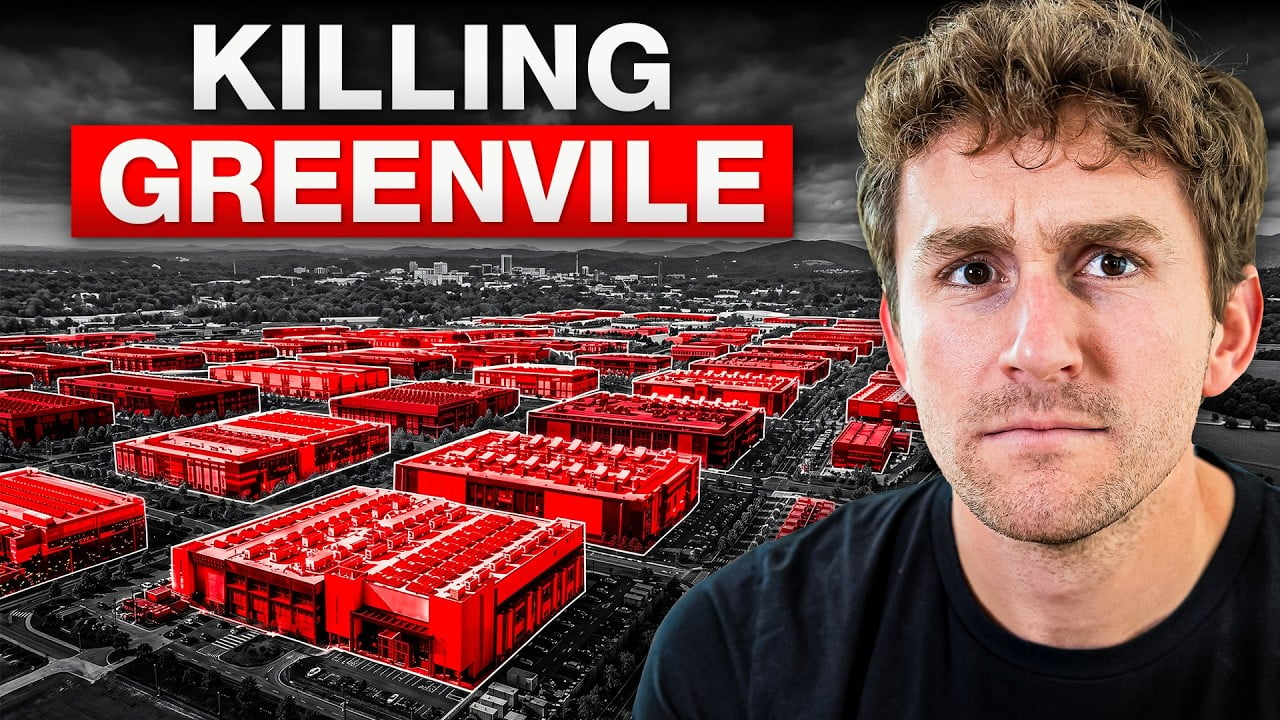
Greenville's data centers sit inside the Global Business Park, a planned industrial area with direct access to I-85. So the heavy commercial use isn't sitting behind somebody's house.
DartPoints has been here for almost 20 years, and right now they're working on a $125 million expansion at their Global Drive facility, going from 2.5 megawatts to 12.5 megawatts. That's a big jump for that site, but compared to those rural mega-projects, it's still a much smaller footprint. This expansion is being built to support AI and high-performance computing, and DartPoints is working with the utility capacity that's already there. No new power plants, no big new fight over the electric grid, no project showing up in your backyard and changing the whole feel of the area. Construction is already underway, and operations are expected to start in July 2027.
Just down the street, DC BLOX has been running a Tier III facility since 2022. They've been expanding in phases to keep up with demand from local hospitals, universities, and growing businesses, and they landed an $850 million green loan to help fund expansion across the Southeast.
The difference is where this is happening and how quietly it runs, and that's why Greenville feels more like an opportunity than a warning sign.
How Could This Affect Greenville Home Values, and Who Should Be Paying Attention?
We're seeing a specific buyer profile show up here in Greenville: families who used to live outside places like Seattle or Sacramento, relocating because one spouse landed a job that depends on reliable, local computing power.
Greenville has real muscle behind it. Michelin's North American headquarters is right here in Greenville, and they employ around 10,000 people across South Carolina. BMW's manufacturing plant is right up the road in Greer, and they employ more than 11,000 people. Then you've got Lockheed Martin at the Donaldson Center Airport. Add dependable local data infrastructure to that mix, and the Upstate becomes even more attractive for advanced manufacturing, aerospace, and tech-related jobs.
South Carolina has been one of the top states in the country for inbound migration, and a good portion of those buyers are coming from markets like NC, Georgia, Illinois, Florida, California, New York, and other larger to medium sized metros. A lot of them are relocating for work, or relocating because they no longer need to work, and many are showing up with strong equity from the home they just sold. That kind of demand is pushing prices higher, and Greenville's premium neighborhoods tend to feel it first.
Right now, a typical home in Greenville County has an average sales price just over $400,000, and that number has been moving up at a steady, healthy pace. If you're a luxury seller sitting on a home around $1 million or more, this is the kind of buyer pool you want paying attention.
If you're a retiree thinking about downsizing, this is worth watching too. The average age of someone living in Greenville is about 36, and one in every two people who move here are over the age of 50. So we have a young, educated workforce complemented by a growing population of retiring baby boomers. Greenville is becoming an emerging tech hub, and it's already a manufacturing hub, and when you have an educated workforce actively working, property values continue to appreciate.
The data centers causing the biggest problems are getting stopped. The ones still moving forward are quieter, smaller, and in the right locations, and those are the projects that can start showing up in nearby home values for the right reasons. The real question is not whether this shift is happening. It's whether your home is positioned in the right spot to benefit from it, and figuring that out starts with one conversation.
FAQs About Greenville's Data Center Boom
What's the difference between the data centers causing problems in South Carolina and the ones in Greenville?
The ones causing problems are big, rural mega-projects covering hundreds of acres, with heavy power and water needs that can pressure the local grid, compete with farmers for groundwater, and show up on utility bills. Greenville's are smaller, enterprise-class buildings inside an established business park, using infrastructure that's already there.
Which South Carolina counties have paused or rejected data center projects?
Spartanburg, Newberry, Marion, and Colleton counties have all pushed back on major data center projects in the last six months, either rejecting the deal outright or passing a moratorium on new applications.
Is the Spartanburg County data center project still happening?
The $3 billion Project Spero near Anderson Mill Road was withdrawn by the developer in February 2026 after strong community pushback, and Spartanburg County Council then approved a one-year moratorium on new data center applications. However, the Valara Holdings project at the old Kohler plant site is still under construction, and nearby residents have complained about noise and energy use.
What's DartPoints building in Greenville, and when will it be finished?
DartPoints is in the middle of a $125 million expansion of its Global Drive facility in the Global Business Park, going from 2.5 megawatts to 12.5 megawatts to support AI and high-performance computing. Construction is underway now, with operations expected to start in July 2027.
Why is Greenville's data center growth different from what's happening in rural counties?
Greenville's data centers sit inside the Global Business Park with direct access to I-85, so the heavy commercial use isn't sitting behind anyone's house. The projects are using power and infrastructure that's already there instead of requiring new power plants, which is a big part of why there hasn't been the same pushback.
How could this affect home values in Greenville?
Greenville's growing data infrastructure, combined with major employers like Michelin, BMW, and Lockheed Martin, is drawing buyers relocating from markets like Seattle and Sacramento for jobs that depend on reliable local computing power. That demand is part of what's pushing Greenville County's average home sale price, just over $400,000 right now, up at a steady pace, with premium neighborhoods tending to feel it first.
Who should be paying closest attention to this shift?
Luxury sellers with homes around $1 million or more, since that's the buyer pool this growth is drawing in. Retirees considering downsizing should also pay attention, since one in every two people moving to Greenville are over the age of 50.
Want to Know How This Affects Your Home's Value?
Where this boom shows up on your street comes down to which side of the county line you're on, and right now, that distinction is important.
So if you want to know how this growth affects your home's value, or which Greenville neighborhoods you should be watching before more out-of-state buyers get here, email me at [email protected], or call or text at (864) 688-9738. I'll put together a personalized market analysis based on where you're looking, or where you already live.
And if you're thinking about moving here, but you still can't picture what day-to-day life in Greenville feels like, I've linked a video for you that breaks down Greenville's spring calendar, including the festival USA Today ranked as the best art festival in the country.
As always, I'm Will Sawyer, your friend in real estate. Until next time, stay safe.
Check out this article next